
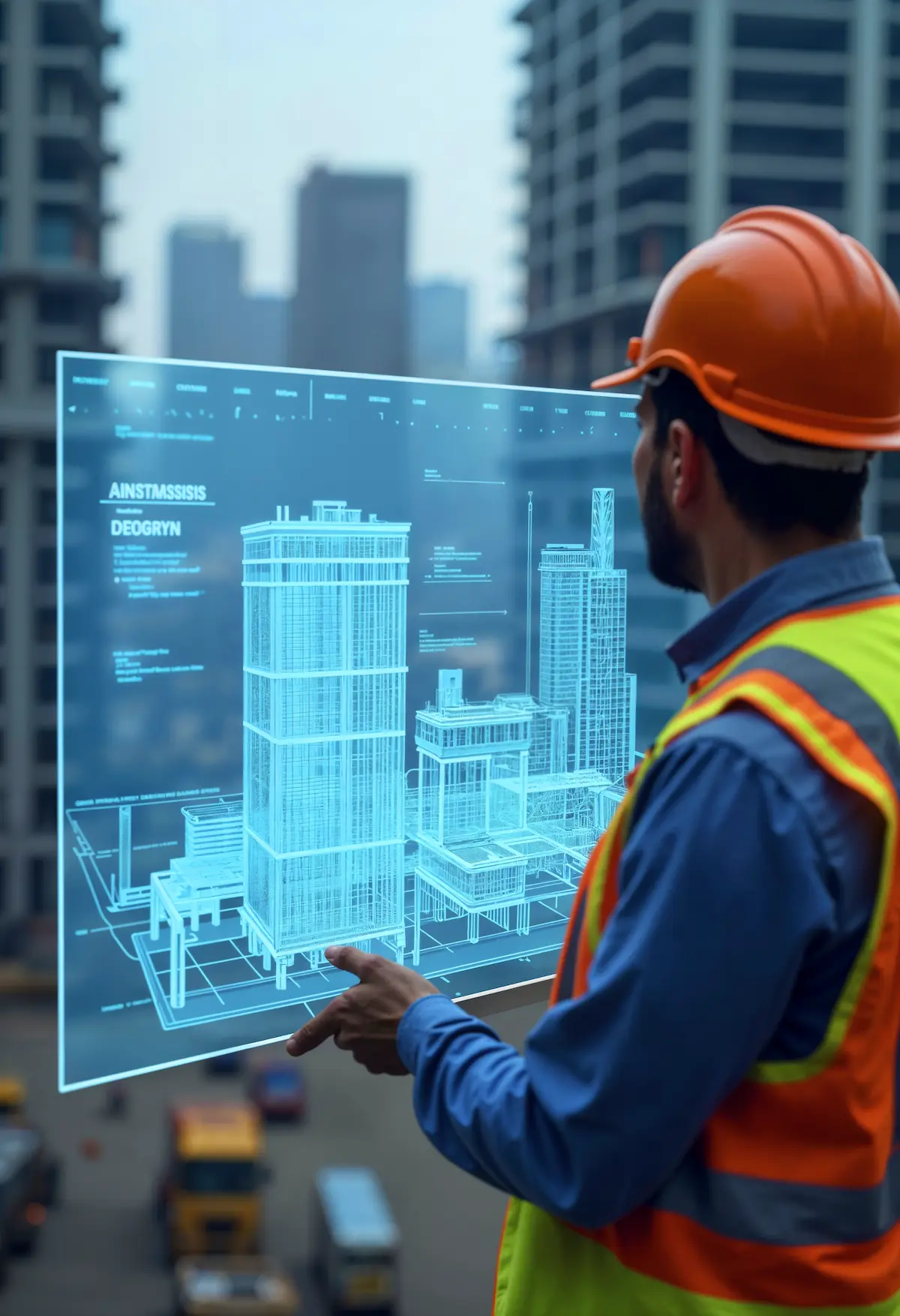
Scan-to-BIM is a process that converts 3D laser scanning data into a digital Building Information Model (BIM). In UAE construction projects, this workflow captures accurate measurements of existing structures and converts them into precise digital models used for design coordination, renovation planning, and infrastructure management.
Why Scan-to-BIM Is Becoming Essential in UAE Construction
Many buildings across the UAE were constructed years ago, often with incomplete or outdated drawings.
When renovation or expansion begins, engineers frequently encounter a problem:
The existing building conditions do not match the original design documents.
Columns may have shifted slightly during construction.
Structural elements may differ from the original drawings.
Mechanical systems may have been modified over time.
Without accurate documentation of the existing structure, engineers must rely on assumptions.
This increases the risk of:
- design conflicts
- construction delays
- unexpected rework
- coordination issues between disciplines
Scan-to-BIM addresses this challenge by capturing accurate digital representations of existing buildings and infrastructure.
What Is Scan-to-BIM?
Scan-to-BIM is a workflow that converts real-world measurements into a digital 3D model used in engineering and construction planning.
The process begins with 3D laser scanning, which captures millions of spatial data points from a structure or site.
These data points form a point cloud, representing the exact geometry of the environment.
Specialized software then converts the point cloud into a BIM model containing:
- structural elements
- walls and floors
- columns and beams
- mechanical systems
- architectural components
The resulting BIM model becomes a reliable digital reference for the project.
Step-by-Step: How the Scan-to-BIM Workflow Works
Step 1: Laser Scanning of the Site or Structure
The process begins with a 3D laser scanner capturing the geometry of the environment.
The scanner collects millions of data points that represent:
- building dimensions
- structural elements
- surrounding features
- infrastructure components
This data provides a complete representation of the site.
Step 2: Creation of a Point Cloud
The laser scanning data is processed into a point cloud, which is a dense collection of spatial coordinates.
The point cloud forms a digital replica of the scanned environment.
Engineers can view the structure in 3D and measure any element directly from the point cloud.
Step 3: Point Cloud Processing and Cleaning
Raw scanning data often contains noise or redundant information.
Processing software removes unnecessary points and aligns multiple scans together.
This creates a clean and accurate dataset representing the structure.
Step 4: BIM Model Creation
Once the point cloud is prepared, engineers convert the data into a BIM model.
Using modeling software, they recreate:
- walls
- columns
- slabs
- mechanical systems
- architectural features
The BIM model now represents the building with engineering-level accuracy.
Step 5: Deviation Analysis and Documentation
Scan-to-BIM models allow engineers to compare the actual structure with the original design drawings.
This comparison identifies:
- structural deviations
- alignment differences
- construction modifications
The resulting documentation supports planning, renovation, and compliance.
Where Scan-to-BIM Is Used in UAE Projects
Scan-to-BIM workflows are increasingly used across many types of construction and infrastructure projects.
Renovation and Retrofit Projects
Many renovation projects require accurate information about existing building conditions.
Scan-to-BIM allows engineers to create precise digital models before redesign begins.
This helps architects and engineers plan modifications safely.
Facility Management and Asset Documentation
Large commercial buildings and industrial facilities require accurate documentation for long-term management.
Scan-to-BIM provides digital building records that help facility managers maintain infrastructure efficiently.
Infrastructure and Industrial Projects
Scan-to-BIM is also used for documenting complex infrastructure, such as:
- power plants
- industrial facilities
- transportation infrastructure
These projects often involve complex systems where accurate documentation is essential.
Structural Verification and As-Built Documentation
Scan-to-BIM is often used in conjunction with structural as-built surveys.
These surveys verify that constructed elements match approved designs.
Accurate documentation supports compliance and project completion.
Learn more about structural verification surveys
Key Benefits of Scan-to-BIM for Construction Projects
Accurate Digital Representation
Scan-to-BIM creates a precise digital model of the real structure.
This reduces reliance on outdated drawings.
Better Coordination Between Project Teams
Architects, engineers, and contractors can all work from the same digital model.
This improves coordination and reduces design conflicts.
Reduced Construction Risk
Accurate models reduce the risk of unexpected structural conflicts during construction.
Improved Renovation Planning
Engineers can simulate changes and modifications using accurate digital data.
This helps avoid costly surprises during renovation.
Enhanced Asset Management
Building owners can use BIM models to manage maintenance and future upgrades.
Why Scan-to-BIM Is Growing in the UAE
Several factors are driving adoption across the UAE construction industry.
Rapid Infrastructure Development
Major infrastructure projects require accurate documentation of existing conditions.
Complex Urban Developments
Modern buildings contain integrated mechanical, electrical, and structural systems.
Scan-to-BIM helps coordinate these systems effectively.
Digital Construction Initiatives
Many UAE projects now adopt digital construction workflows that integrate surveying, modeling, and project management systems.
Role of Surveying in Scan-to-BIM Workflows

Surveying provides the foundation for accurate scanning and modeling.
Survey teams capture precise spatial data through technologies such as:
- land surveying
- laser scanning
- utility mapping
- structural verification surveys
These measurements ensure the BIM model reflects real-world site conditions.
For example, before scanning begins, developers may require a land survey to establish site boundaries and terrain conditions.
Learn more about land surveying services
https://takhteetsurvey.com/land-surveying-in-dubai/
The Future of Scan-to-BIM in Infrastructure Development
Scan-to-BIM is expected to play a major role in the future of construction and infrastructure management.
Emerging applications include:
- digital twins for smart buildings
- infrastructure monitoring systems
- predictive maintenance planning
- integrated smart city infrastructure management
As these technologies evolve, accurate digital models will become essential for managing complex infrastructure networks.
FAQs
What is Scan-to-BIM?
Scan-to-BIM converts laser scanning data into a digital building model used for engineering and construction planning.
Why is Scan-to-BIM useful?
It creates accurate digital representations of buildings and infrastructure.
Is Scan-to-BIM used for renovation projects?
Yes. It helps engineers understand existing building conditions before modifications.
Does Scan-to-BIM replace traditional surveying?
No. It works alongside surveying to capture accurate spatial data.
Is Scan-to-BIM used in UAE infrastructure projects?
Yes. It is increasingly used in construction, facility management, and infrastructure planning.
Conclusion
Scan-to-BIM is transforming how engineers and developers document and manage the built environment. By converting real-world measurements into accurate digital models, it provides the information needed for effective planning, coordination, and long-term asset management.
For construction and infrastructure projects in the UAE, scan-to-BIM workflows reduce uncertainty, improve design accuracy, and support efficient project delivery.
Need Accurate Digital Models for Your Project?
If your construction or infrastructure project requires precise documentation of existing structures, working with experienced survey professionals ensures reliable data capture and modeling.
Discuss your surveying and scanning requirements with Takhteet Survey UAE.
Accurate data today enables better planning and stronger infrastructure tomorrow.
Comments are closed